perhaps he was waiting for a fbs offer, or had one and it wound up going to someone else, or, or, or...His pedigree is pretty good. I understand the skepticism though.

-
Hi Guest, want to participate in the discussions, keep track of read/unread posts access private forums and more? Create your free account and increase the benefits of your eGriz.com experience today!
You are using an out of date browser. It may not display this or other websites correctly.
You should upgrade or use an alternative browser.
You should upgrade or use an alternative browser.
DL question
- Thread starter Da Boyz Mom
- Start date

If the goal (stated in the article) for Zimmer to add another 20-30# over this summer is met he will have gone from 230 to 305 or 315 in 3 years. It took Cody Mauch (NDSU) 5 years to put on that amount of weight.Colin Amick gained 28 lbs and Matt Hilden gained 31 lbs last year.

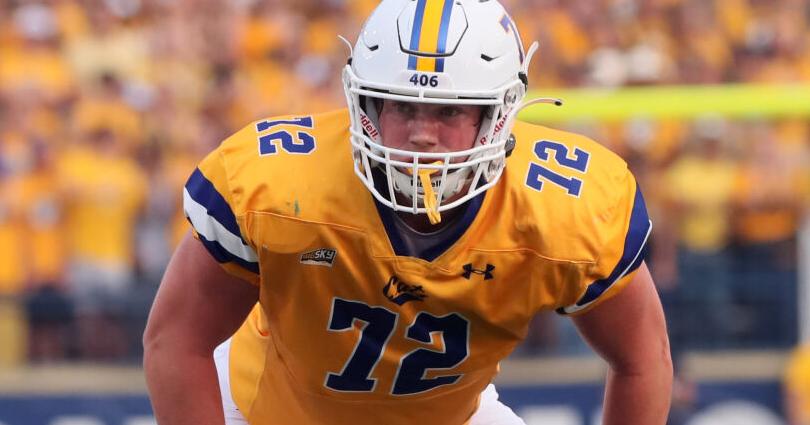
Redshirt freshman LT Braden Zimmer has been 'monumental' for Montana State O-line
“You can't teach that size, that athleticism, his character, his heart for it." - MSU offensive line coach Matt Smith
gaining another 20-30 lbs doesn't sound very healthy for the kid, but i guess the rewards he gets for playing football outweighs the (hopefully temporary) extra weight. from his picture he's obviously bottom-heavy, and you can't exactly tell the extra weight where to go, although you can try.If the goal (stated in the article) for Zimmer to add another 20-30# over this summer is met he will have gone from 230 to 305 or 315 in 3 years. It took Cody Mauch (NDSU) 5 years to put on that amount of weight.
Redshirt freshman LT Braden Zimmer has been 'monumental' for Montana State O-line
“You can't teach that size, that athleticism, his character, his heart for it." - MSU offensive line coach Matt Smithwww.bozemandailychronicle.com

It's really hard to put 20-30 quality lbs on in a year. Even for a young big man.gaining another 20-30 lbs doesn't sound very healthy for the kid, but i guess the rewards he gets for playing football outweighs the (hopefully temporary) extra weight. from his picture he's obviously bottom-heavy, and you can't exactly tell the extra weight where to go, although you can try.

It depends on your frame which is why they look for guys that are tall and can support it. You’d be surprised what these guys can pack on as 18-19 years old. I put on 30+ lbs in 4 months my freshman year. But that’s year one when you go to a regimented college weight and conditioning program and working out 4+ hours a day total. You have to eat a ton of calories and very frequently. Adding in additional supplements, protein, creatine… I don’t think that’s too uncommon in year 1.
However, acking on double digits gets a lot harder as you go along. You can only add so much lean muscle. The calories you’re burning increase as you go up as well. It becomes a viscous cycle for big guys. Keeping agility is very difficult. It’s certainly a balancing act.
However, acking on double digits gets a lot harder as you go along. You can only add so much lean muscle. The calories you’re burning increase as you go up as well. It becomes a viscous cycle for big guys. Keeping agility is very difficult. It’s certainly a balancing act.
The meta studies support that. A genetically gifted 6'6" 250# 20 yo could maybe gain 20# of muscle in the first year of training. Add up the bone, blood and orher tissue and 30# is possible. That's the upper end of human potential. Assuming he's still an untrained beginner after being in the bobcat program for a couple years is a bit of a stretch and progress slows as your training advances.It depends on your frame which is why they look for guys that are tall and can support it. You’d be surprised what these guys can pack on as 18-19 years old. I put on 30+ lbs in 4 months my freshman year. But that’s year one when you go to a regimented college weight and conditioning program and working out 4+ hours a day total. You have to eat a ton of calories and very frequently. Adding in additional supplements, protein, creatine… I don’t think that’s too uncommon in year 1.
However, acking on double digits gets a lot harder as you go along. You can only add so much lean muscle. The calories you’re burning increase as you go up as well. It becomes a viscous cycle for big guys. Keeping agility is very difficult. It’s certainly a balancing act.
Muscle Growth Rate Studies – Genetic FFMI
 geneticffmi.com
Last edited:
Ursus Horriblis
Well-known member
Thanks Queen Gertrude!Methinks one loses quickness and overall speed the more one gets heavier!
You point out a meta analysis that includes a variety of ages. College football players at the D1 level by and large are at the upper end of the physical spectrum and are also at the prime age for gains. It’s why they get recruited.The meta studies support that. A genetically gifted 6'6" 250# 20 yo could maybe gain 20# of muscle in the first year of training. Add up the bone, blood and orher tissue and 30# is possible. That's the upper end of human potential. Assuming he's still an untrained beginner after being in the bobcat program for a couple years is a bit of a stretch and progress slows as your training advances.
Muscle Growth Rate Studies – Genetic FFMI
Here’s a good example from UO of what it takes with a specific example. This example is also a linebacker and not a lineman.
Football Gains - Training & Conditioning
When an outside linebacker needed to put on 20 to 30 pounds, this sports dietitian developed a plan that included calorie-dense foods and eating several times a day... more »
training-conditioning.com
We have seen many lineman at the FCS level pack on 60-80 pounds in their career. It’s not some anomaly. Look at the FBS level where there’s more resources and the absolute highest quality athletes or frames and see what they do.
Yea it's a meta analysis of human physiology. I hate to point out to you that most of the outliers including college athletes are not natural so if the young man goes down that road then all bets are off.You point out a meta analysis that includes a variety of ages. College football players at the D1 level by and large are at the upper end of the physical spectrum and are also at the prime age for gains. It’s why they get recruited.
Here’s a good example from UO of what it takes with a specific example. This example is also a linebacker and not a lineman.
Football Gains - Training & Conditioning
When an outside linebacker needed to put on 20 to 30 pounds, this sports dietitian developed a plan that included calorie-dense foods and eating several times a day... more »training-conditioning.com
We have seen many lineman at the FCS level pack on 60-80 pounds in their career. It’s not some anomaly. Look at the FBS level where there’s more resources and the absolute highest quality athletes or frames and see what they do.
And a Meta-analysis is not a study, just a review. And this particular one is of 2000 participants over 111 studies. There’s no discussion of homogeneity. 2000 people doesn’t really represent the whole of human physiology now does it? But even from this review that you posted.Yea it's a meta analysis of human physiology. I hate to point out to you that most of the outliers including college athletes are not natural so if the young man goes down that road then all bets are off.
Factors Affecting Beginner Rates
Several variables influence individualbeginner growth rates [web:69][web:70]:- Frame size: Taller individuals and those with broader frames gain faster than shorter/narrower individuals [web:69]
- Starting point: Previously sedentary individuals may gain faster initially [web:70]
- Age: Younger lifters (teens-20s) typically gain faster than older beginners [web:68]
- Genetics: Individual response rates vary 2-3x based on genetic factors [web:70]
- Training quality: Optimal programming accelerates gains within genetic potential [web:69]
- Nutrition: Adequate protein and calorie surplus support maximum growth rates [web:70]
So you're going to post an anecdotal example of one Oregon linebacker as your example and then argue that a meta study with more than 2000 participants isn't valid? Uh ok...There is nothing magic concerning the physiology of a DI football player. They put their pants on one leg at a time like everyone. Yes he has a big frame, yes he is young, yes he is genetically gifted, yes he is in a program to maximize his size but it doesn't change physiology. Can he put on 20-30 quality lbs in a year? Probably but doing it multiple years in a row is not probable. How many years has the lad been lifted heavy and eating like a horse? I would argue that his beginner window is most likely behind him.And a Meta-analysis is not a study, just a review. And this particular one is of 2000 participants over 111 studies. There’s no discussion of homogeneity. 2000 people doesn’t really represent the whole of human physiology now does it? But even from this review that you posted.
Factors Affecting Beginner Rates
Several variables influence individualbeginner growth rates [web:69][web:70]:
Many of these factors are absolutely at the maximized point for D1 college football players.
- Frame size: Taller individuals and those with broader frames gain faster than shorter/narrower individuals [web:69]
- Starting point: Previously sedentary individuals may gain faster initially [web:70]
- Age: Younger lifters (teens-20s) typically gain faster than older beginners [web:68]
- Genetics: Individual response rates vary 2-3x based on genetic factors [web:70]
- Training quality: Optimal programming accelerates gains within genetic potential [web:69]
- Nutrition: Adequate protein and calorie surplus support maximum growth rates [web:70]
I simply gave you an anecdotal example to show what a D1 program does to maximize all the factors I listed and your meta-analysis brought up as the important factors. Also, merely pointed out that the molding clay being started with isnt exactly bottom of the barrel. Feel free to go look at listed rosters year by year and see what lineman are packing on. We’ve both stated that it gets harder as you go along. Not disputing that. Just that it isn’t such a rarity as you’re trying to make it.So you're going to post an anecdotal example of one Oregon linebacker as your example and then argue that a meta study with more than 2000 participants isn't valid? Uh ok...There is nothing magic concerning the physiology of a DI football player. They put their pants on one leg at a time like everyone. Yes he has a big frame, yes he is young, yes he is genetically gifted, yes he is in a program to maximize his size but it doesn't change physiology. Can he put on 20-30 quality lbs in a year? Probably but doing it multiple years in a row is not probable. How many years has the lad been lifted heavy and eating like a horse? I would argue that his beginner window is most likely behind him.
mthoopsfan
Well-known member
I agree with you. Not rare at all. For the right motivated guy, often can happen.I simply gave you an anecdotal example to show what a D1 program does to maximize all the factors I listed and your meta-analysis brought up as the important factors. Also, merely pointed out that the molding clay being started with isnt exactly bottom of the barrel. Feel free to go look at listed rosters year by year and see what lineman are packing on. We’ve both stated that it gets harder as you go along. Not disputing that. Just that it isn’t such a rarity as you’re trying to make it.
Was the meta study 2000 football players?

GriznMN
Well-known member
Just need the first step to be quick and then every step thereafter takes care of itself.Methinks one loses quickness and overall speed the more one gets heavier!
