
AZhoopsMTfootballfan
Well-known member
The data shows that Gen Z is actually less physically active overall than millennials and other previous generations at the same age. Gen Z also has the highest rate of nicotine consumption of any generation despite the now known health issues. Gen Z drinking less doesn’t make them healthier when they are consuming more nicotine, not sexually active and are less physically active overall.That’s a pretty weak connection you’re trying to make. Having less sex doesn’t mean a generation is less focused on health or wellbeing. If anything, Gen Z also drinks less, smokes less, and exercises more than previous generations at the same age, which are actual health indicators.
As for millennials, I never stated they were retired. The point is that a lot of the loudest criticism about “work ethic” tends to come from older generations looking backward through nostalgia. Every generation thinks the one after it is softer, but the data rarely backs that up.
Honestly it just sounds like you’re grabbing at whatever statistic you can find to keep the “young people are lazy” narrative alive. The reality is the habits younger generations are forming today are far healthier than the ones older generations normalized for decades.
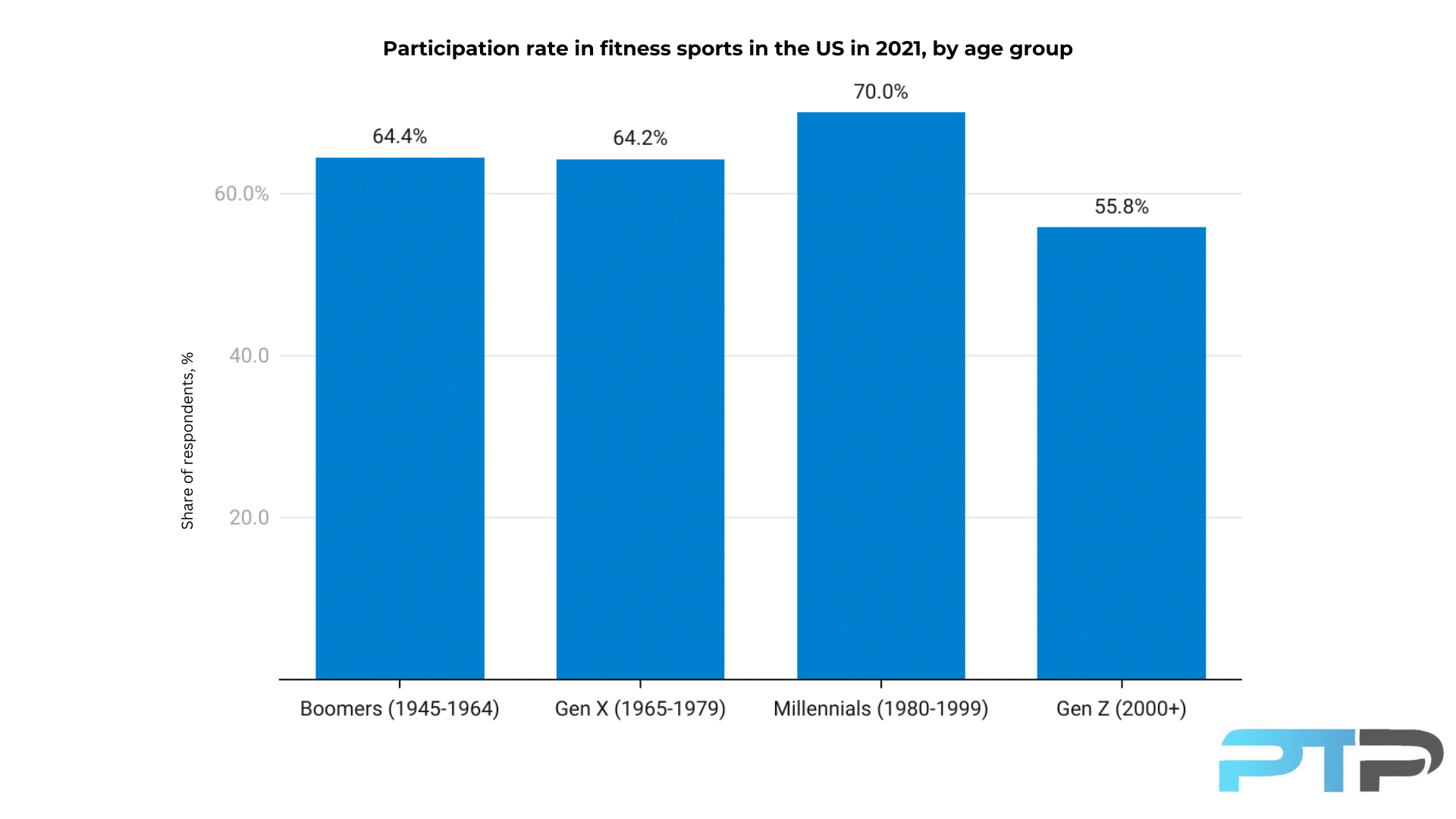
Fitness Industry Statistics - the 2026 Insiders Review
The fitness industry has undergone significant changes in recent years, influenced by technological advancements, changing consumer behaviors, and global
 www.ptpioneer.com

Older People Are Highly Active but Don’t Love the Gym. Gen Z Is the Opposite
According to new research, Baby Boomers are the most active generation but Gen Z members are much more likely to attend the gym.
 athletechnews.com
ABC Fitness Releases Wellness Watch Fall 2024 Report, Highlighting Generational Fitness Trends - Health & Fitness Association
ABC Fitness, the leading technology provider for fitness businesses worldwide, has released its Wellness Watch Fall 2024 report, detailing how different generations approach fitness and revealing significant variations in preferences, behaviors, and goals across age groups. While all generations...
 www.healthandfitness.org
Last edited:

