mthoopsfan
Well-known member
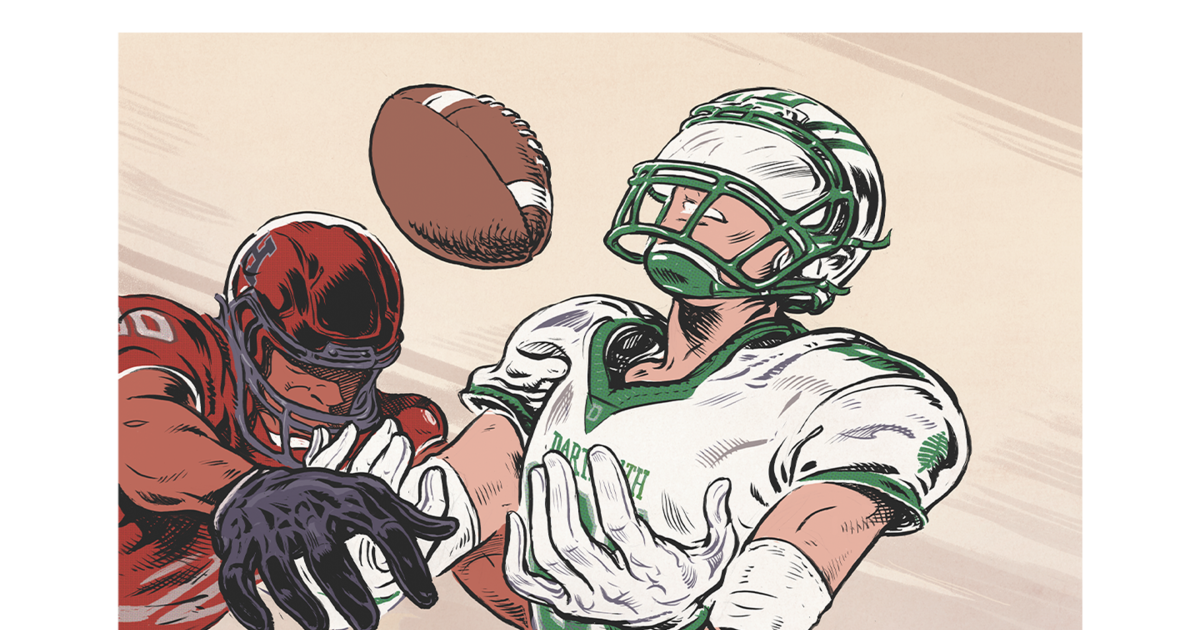
Feel free not to look at any of this. One is a good article on the Harvard - Dartmouth Rivalry. Dartmouth and Harvard play this weekend. The other is a good article on the undefeated and national championship Dartmouth 1925. That was my team. Ha. It has some other interesting football history in it too.
The writer of the articles is a Dartmouth '76, wrote sports for the school newspaper in school, and is still a big time opinion writer. He's won a Pulitzer Prize.
"Dartmouth was undefeated in 1925. The Big Green was in the middle of a three-year, 21-0-1 unbeaten streak that began in 1923 with a 16-14 win against Brown and continued until a 14-7 loss at Yale in 1926.
Never again would Dartmouth approach national championship status. The team was invited to the 1937 Rose Bowl game but declined to play, citing the distraction a postseason game would present to student-athletes’ academic performance. The last time the team was nationally ranked was 55 years ago, when it played Yale before a crowd of 60,820 in 1970.
No one would have questioned the primacy of a Dartmouth team that won by an average score of 43-4; a team so dominant that, as the season progressed, it often would decline to accept rivals’ penalties; and a team that prompted the legendary Amos Alonzo Stagg, the Chicago coach who invented the quick kick, the lateral pass, and the quarterback-keeper play, to call it the greatest team he ever saw. And no one would have minimized the offensive power and defensive discipline of a team journalist Damon Runyon said was “champion of the world.”
Or at least champion of the world of sports. Headed by coach Jesse Hawley, class of 1909, the 1925 Dartmouth team had only three rivals nationally: Michigan and Pitt, which each finished with a single loss but played more demanding schedules; and Alabama, which finished with a 10-0 record and took the Rose Bowl invitation Dartmouth declined.
The October 24 Harvard game attracted 54,000 fans, and administrators at Dartmouth and Harvard swore they could have sold at least 30,000 more tickets. The resulting convergence of 20,000 automobiles around Harvard Stadium prompted a reporter to write, “Never in the history of local gridiron struggles was there such a jam of motor vehicles of all sizes and descriptions from all over New England and elsewhere.” Some 150 extra police officers were deployed to the scene. More than a half-million dollars was wagered on the game—the equivalent of more than $9 million in 2025."
 dartmouthalumnimagazine.com
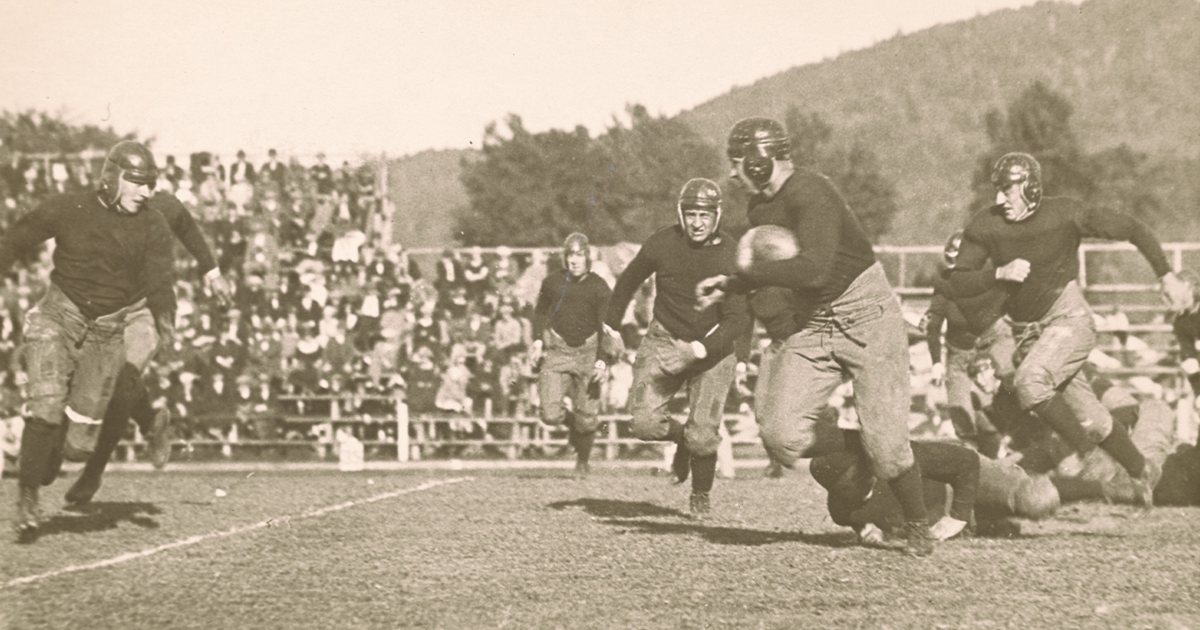 dartmouthalumnimagazine.com
The writer of the articles is a Dartmouth '76, wrote sports for the school newspaper in school, and is still a big time opinion writer. He's won a Pulitzer Prize.
"Dartmouth was undefeated in 1925. The Big Green was in the middle of a three-year, 21-0-1 unbeaten streak that began in 1923 with a 16-14 win against Brown and continued until a 14-7 loss at Yale in 1926.
Never again would Dartmouth approach national championship status. The team was invited to the 1937 Rose Bowl game but declined to play, citing the distraction a postseason game would present to student-athletes’ academic performance. The last time the team was nationally ranked was 55 years ago, when it played Yale before a crowd of 60,820 in 1970.
No one would have questioned the primacy of a Dartmouth team that won by an average score of 43-4; a team so dominant that, as the season progressed, it often would decline to accept rivals’ penalties; and a team that prompted the legendary Amos Alonzo Stagg, the Chicago coach who invented the quick kick, the lateral pass, and the quarterback-keeper play, to call it the greatest team he ever saw. And no one would have minimized the offensive power and defensive discipline of a team journalist Damon Runyon said was “champion of the world.”
Or at least champion of the world of sports. Headed by coach Jesse Hawley, class of 1909, the 1925 Dartmouth team had only three rivals nationally: Michigan and Pitt, which each finished with a single loss but played more demanding schedules; and Alabama, which finished with a 10-0 record and took the Rose Bowl invitation Dartmouth declined.
The October 24 Harvard game attracted 54,000 fans, and administrators at Dartmouth and Harvard swore they could have sold at least 30,000 more tickets. The resulting convergence of 20,000 automobiles around Harvard Stadium prompted a reporter to write, “Never in the history of local gridiron struggles was there such a jam of motor vehicles of all sizes and descriptions from all over New England and elsewhere.” Some 150 extra police officers were deployed to the scene. More than a half-million dollars was wagered on the game—the equivalent of more than $9 million in 2025."
Dartmouth vs. Harvard | Dartmouth Alumni Magazine
It began nearly a century and a half ago in front of a handful of people curious about the way an oddly shaped inflated sphere bounced on a desolate Massachusetts field.
Gridiron Glory | Dartmouth Alumni Magazine
No one living remembers that championship season. Its players have all died, as have the tens of thousands of fans in raccoon coats and bowler hats. That season lives on only in yellowed newspaper clips and a remarkable scrapbook in the College archives.