

UofMGrizFan
Well-known member
http://helenair.com/news/state-and-...11e2-bc39-001a4bcf887a.html?comment_form=true
Butte author explores history of Montana's greatest sports rivalry
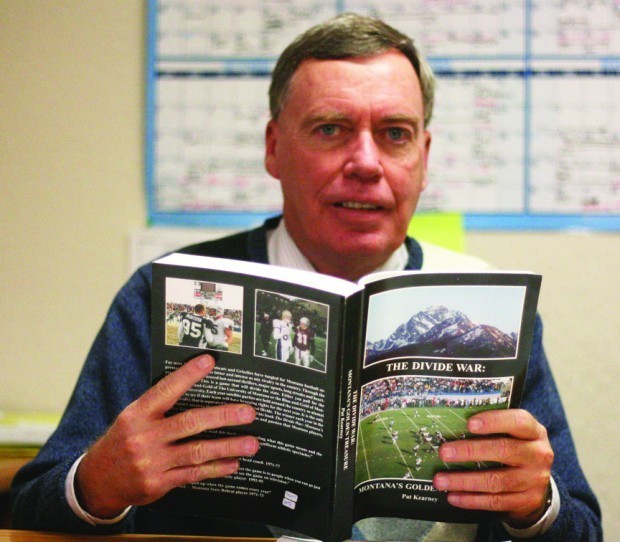
Butte author Pat Kearney knows Montana’s big game inside and out.
In 2004, he wrote the sixth book of his career, “The Divide War: Montana’s Golden Treasure,” about the state’s greatest rivalry.
After 100 years of games, Kearney took four years to compile a text history of football contests between the University of Montana and Montana State. He published the book in 2004 and as the only book strictly devoted to the rivalry, it is a considerable source at 512 pages.
After finishing a book about Butte’s Copper League baseball teams in 2001, Kearney’s next idea on a sports history book was clear.
“I was thinking, ‘What would I want to do next?’ and it was the concept of the Bobcat-Grizzly series,” Kearney said. “It is without question the biggest sporting event in the state every year.”
As a writer dedicated to both Butte and Montana, Kearney likes to chronicle unique events.
“In every one of my books I’ve done I go into virgin history,” Kearney said. “In other words, history that no one has done before.”
“The Divide War” opens with a foreword and submissions by former University of Montana coach Don Read and former MSU coach Sonny Holland. Both coaches won national titles with their respective squads.
From there, the book presents year-by-year chapters of the game starting from the first meeting in 1897.
Obstacles in the early contests seem a world away from football as known today at the two schools.
The squads would have to travel by train to play each other. Sometimes coaches were forced to referee games. One player was kidnapped during the early years of the game.
The game on the field was more violent than today.
After losing to the University of Montana 79-0 in 1904, MSU passed a decree to suspend the game possibly in fear of another lopsided defeat.
Football fields in the early 20th century saw some players killed playing the game. Ten players died playing intercollegiate ball across the country in 1905.
In 1911, the death of MSU player Charles Lange, due to football injuries, canceled the annual meeting between the two Montana teams.
Among those early games, Kearney believes the 1904 game was particularly a turning point.
“In 1904, the Bobcats had won a lot of the early games and the Grizzlies won 79 to nothing,” Kearney said. “The next year the Bobcat faculty voted not to play. The pride in the early games was very, very real. Montana State had an early edge in the series.
“The game that changed the whole complexion of the series was in 1904. It was at that point that the Grizzlies took football extremely seriously, not that Bozeman wasn’t before. All of the sudden that had become a big deal. I found that 1904 game to be an extremely big game in the series. That changed the momentum of the series for a number of years.”
MSU held a 6-3 advantage in the first nine meetings between the teams. The Griz would go on a 20-game unbeaten streak against the Bobcats after that, though four of the contests ended in ties.
****
The modern Cat-Griz game might see a handful of small-school football players from Montana.
In the games 100 years ago, players from smaller Montana communities played a big role in the game.
“The one thing that really stood out was that in the early years there were a lot of guys from really small towns that were major contributors,” Kearney said. “One of the biggest things I found fascinating is that almost every community in this state had a player play in the game. It didn’t matter if they were a Bobcat or a Grizzly. There were places I never expected a player from and there were guys that played for both sides. Some of the very biggest contributors were from small towns.”
One of the small-town players from the early days, Twin Bridges’ Merritt Owsley, still holds the University of Montana record for touchdowns in a Cat-Griz game at five. He did that in 1912.
Through exhaustive research in libraries in Bozeman and Missoula, Kearney put together box scores for many of the early games. On some of the contests he had to scour multiple newspaper reports to figure out which players scored.
“I would read the entire game and I would take whatever information I could and that’s what I would determine as the box score,” Kearney said. “Are they totally accurate? No. But they’re as accurate as you can get.”
Certain stories both in games and outside of the arena caught Kearney’s interest.
In 1912, UM hired a 25-year-old former Grizzly and Missoulian sports reporter named Robert Cary to coach the team. He died in September of that season after being diagnosed with diabetes. His parents made a trip to Missoula to visit him in the hospital, but he died earlier in the day before they arrived.
“I found that to be a surprising and very, very unusual story,” Kearney said. “It was very intriguing. I did a tremendous amount of research on that story.”
****
Probably the most controversial game in its history came in 1922. Montana State led 6-0 until the fourth quarter, when on the last play of the game UM’s Joe Kerschner was awarded a touchdown.
Two timekeepers disagreed on whether the score counted, since it appeared time ran out. The original decision was upheld and Montana was given an opportunity for an extra point, which the Griz completed to win 7-6, even though some thought the team didn’t deserve the extra-point try since time had run out earlier.
“They had two officials. They had the issue over how much time was left in the game. I found that to be a real compelling thing. What in the heck were they thinking then?” Kearney said.
There are also away-from-the-game tidbits on the early history of the teams.
Before they were the Grizzlies, the Montana boys were dubbed the Bruins by a Utah sports writer.
Montana State once made a push for the Mountain Lions to be the team’s mascot, but it didn’t hold and later the school accepted its current moniker, the Bobcats.
A favorite fact by Butte fans is that the city played host to the game from 1926 to 1950.
“It had the biggest stadium, it was halfway between both towns,” Kearney said. “They wanted a way to kind of revive the game. The Chamber of Commerce was vital in getting that game to the Mining City.”
In years past, coaches have asked Kearney to speak to the teams before the game to give them perspective on its history. One of his favorite examples is the 1941 contest.
“Most of the players that played in that particular game died in World War II,” Kearney said. “There were a number of Grizzlies, including Eso Naranche. I’ve talked to both the Grizzlies and Bobcats prior to the game. They both need to be very thankful to play in a big game like that.”
Kearney has received some mixed reviews of his book in the eight years since its publication.
After all, fans of the teams want to see their particular team shine.
“I spent 30 years in journalism,” said Kearney, a Montana State graduate. “I have to be objective about what I do. When you go into a subject like that you have to be objective about everything you do. When I wrote that book I wanted people to look at that book and say, ‘Damn, that was a good book.’ I didn’t want Bobcats fans asking me why I’m not a Bobcat. A lot of people say, ‘You are a Bobcat.’ I’m a journalist first and a lot of people need to understand that.”
****
Kearney named the rivalry game “The Divide War” because he felt it was more appropriate than “Brawl of the Wild” or “Cat-Griz.”
“The game should be called the Divide War. They play for the Great Divide Trophy. They’re going to play for that from now until the end of this century,” he said. “The Continental Divide separates the two communities. The communities are so different culturally. They are very different as far as football schools.”
Those who sit with Kearney at the game understand how much he knows.
“If something comes up I can tell them almost immediately if that’s ever happened before,” Kearney said.
He plans to update the book possibly in the next 10 years.
The Divide War can be found at amazon.com or at buttebooks.com.
Butte author explores history of Montana's greatest sports rivalry
Butte author Pat Kearney knows Montana’s big game inside and out.
In 2004, he wrote the sixth book of his career, “The Divide War: Montana’s Golden Treasure,” about the state’s greatest rivalry.
After 100 years of games, Kearney took four years to compile a text history of football contests between the University of Montana and Montana State. He published the book in 2004 and as the only book strictly devoted to the rivalry, it is a considerable source at 512 pages.
After finishing a book about Butte’s Copper League baseball teams in 2001, Kearney’s next idea on a sports history book was clear.
“I was thinking, ‘What would I want to do next?’ and it was the concept of the Bobcat-Grizzly series,” Kearney said. “It is without question the biggest sporting event in the state every year.”
As a writer dedicated to both Butte and Montana, Kearney likes to chronicle unique events.
“In every one of my books I’ve done I go into virgin history,” Kearney said. “In other words, history that no one has done before.”
“The Divide War” opens with a foreword and submissions by former University of Montana coach Don Read and former MSU coach Sonny Holland. Both coaches won national titles with their respective squads.
From there, the book presents year-by-year chapters of the game starting from the first meeting in 1897.
Obstacles in the early contests seem a world away from football as known today at the two schools.
The squads would have to travel by train to play each other. Sometimes coaches were forced to referee games. One player was kidnapped during the early years of the game.
The game on the field was more violent than today.
After losing to the University of Montana 79-0 in 1904, MSU passed a decree to suspend the game possibly in fear of another lopsided defeat.
Football fields in the early 20th century saw some players killed playing the game. Ten players died playing intercollegiate ball across the country in 1905.
In 1911, the death of MSU player Charles Lange, due to football injuries, canceled the annual meeting between the two Montana teams.
Among those early games, Kearney believes the 1904 game was particularly a turning point.
“In 1904, the Bobcats had won a lot of the early games and the Grizzlies won 79 to nothing,” Kearney said. “The next year the Bobcat faculty voted not to play. The pride in the early games was very, very real. Montana State had an early edge in the series.
“The game that changed the whole complexion of the series was in 1904. It was at that point that the Grizzlies took football extremely seriously, not that Bozeman wasn’t before. All of the sudden that had become a big deal. I found that 1904 game to be an extremely big game in the series. That changed the momentum of the series for a number of years.”
MSU held a 6-3 advantage in the first nine meetings between the teams. The Griz would go on a 20-game unbeaten streak against the Bobcats after that, though four of the contests ended in ties.
****
The modern Cat-Griz game might see a handful of small-school football players from Montana.
In the games 100 years ago, players from smaller Montana communities played a big role in the game.
“The one thing that really stood out was that in the early years there were a lot of guys from really small towns that were major contributors,” Kearney said. “One of the biggest things I found fascinating is that almost every community in this state had a player play in the game. It didn’t matter if they were a Bobcat or a Grizzly. There were places I never expected a player from and there were guys that played for both sides. Some of the very biggest contributors were from small towns.”
One of the small-town players from the early days, Twin Bridges’ Merritt Owsley, still holds the University of Montana record for touchdowns in a Cat-Griz game at five. He did that in 1912.
Through exhaustive research in libraries in Bozeman and Missoula, Kearney put together box scores for many of the early games. On some of the contests he had to scour multiple newspaper reports to figure out which players scored.
“I would read the entire game and I would take whatever information I could and that’s what I would determine as the box score,” Kearney said. “Are they totally accurate? No. But they’re as accurate as you can get.”
Certain stories both in games and outside of the arena caught Kearney’s interest.
In 1912, UM hired a 25-year-old former Grizzly and Missoulian sports reporter named Robert Cary to coach the team. He died in September of that season after being diagnosed with diabetes. His parents made a trip to Missoula to visit him in the hospital, but he died earlier in the day before they arrived.
“I found that to be a surprising and very, very unusual story,” Kearney said. “It was very intriguing. I did a tremendous amount of research on that story.”
****
Probably the most controversial game in its history came in 1922. Montana State led 6-0 until the fourth quarter, when on the last play of the game UM’s Joe Kerschner was awarded a touchdown.
Two timekeepers disagreed on whether the score counted, since it appeared time ran out. The original decision was upheld and Montana was given an opportunity for an extra point, which the Griz completed to win 7-6, even though some thought the team didn’t deserve the extra-point try since time had run out earlier.
“They had two officials. They had the issue over how much time was left in the game. I found that to be a real compelling thing. What in the heck were they thinking then?” Kearney said.
There are also away-from-the-game tidbits on the early history of the teams.
Before they were the Grizzlies, the Montana boys were dubbed the Bruins by a Utah sports writer.
Montana State once made a push for the Mountain Lions to be the team’s mascot, but it didn’t hold and later the school accepted its current moniker, the Bobcats.
A favorite fact by Butte fans is that the city played host to the game from 1926 to 1950.
“It had the biggest stadium, it was halfway between both towns,” Kearney said. “They wanted a way to kind of revive the game. The Chamber of Commerce was vital in getting that game to the Mining City.”
In years past, coaches have asked Kearney to speak to the teams before the game to give them perspective on its history. One of his favorite examples is the 1941 contest.
“Most of the players that played in that particular game died in World War II,” Kearney said. “There were a number of Grizzlies, including Eso Naranche. I’ve talked to both the Grizzlies and Bobcats prior to the game. They both need to be very thankful to play in a big game like that.”
Kearney has received some mixed reviews of his book in the eight years since its publication.
After all, fans of the teams want to see their particular team shine.
“I spent 30 years in journalism,” said Kearney, a Montana State graduate. “I have to be objective about what I do. When you go into a subject like that you have to be objective about everything you do. When I wrote that book I wanted people to look at that book and say, ‘Damn, that was a good book.’ I didn’t want Bobcats fans asking me why I’m not a Bobcat. A lot of people say, ‘You are a Bobcat.’ I’m a journalist first and a lot of people need to understand that.”
****
Kearney named the rivalry game “The Divide War” because he felt it was more appropriate than “Brawl of the Wild” or “Cat-Griz.”
“The game should be called the Divide War. They play for the Great Divide Trophy. They’re going to play for that from now until the end of this century,” he said. “The Continental Divide separates the two communities. The communities are so different culturally. They are very different as far as football schools.”
Those who sit with Kearney at the game understand how much he knows.
“If something comes up I can tell them almost immediately if that’s ever happened before,” Kearney said.
He plans to update the book possibly in the next 10 years.
The Divide War can be found at amazon.com or at buttebooks.com.
 ...
...